
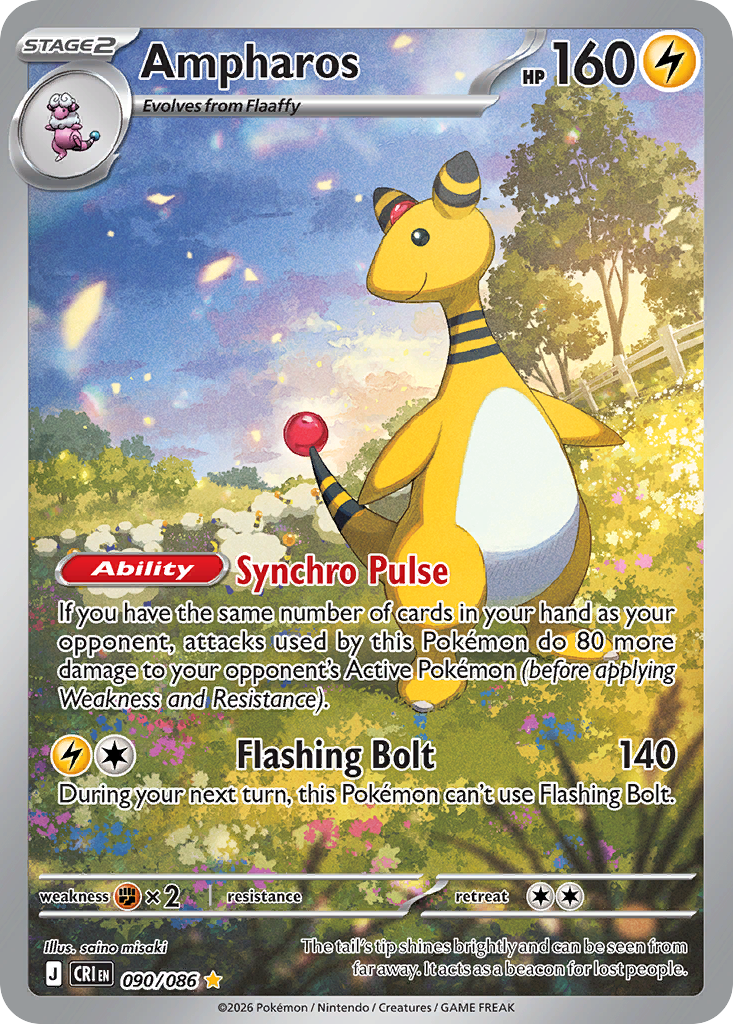
AmpharosChaos Rising · #90/86 · Illustration Rare · 2026
“The tail's tip shines brightly and can be seen from far away. It acts as a beacon for lost people.”— art by saino misaki
The Hoshino Verdict
What this card’s market is actually doing — scored, stated and kept current.
Hoshino recorded 2 confirmed sales of this card in the last 12 months. That is too thin to call a trend, so we do not call one. PSA has graded 954 copies of it, 714 of them Gem Mint 10 — a 74.8% gem rate. The most recent sale we hold is 7 days old.
Verdict recomputed 8m ago · it changes as the market does.
Ampharos is card 90 in Chaos Rising, released in 2026 as part of the Mega Evolution series. It is a Illustration Rare card, illustrated by saino misaki.
PSA reports 954 graded copies, 714 of them Gem Mint 10. We hold 2 confirmed sales on record for this card — every price on this page traces back to them.
Descriptive market data, not investment advice. The Hoshino Score measures how deep, liquid, widely-traded, dear and scarce this card’s market is from sales and population records we hold. It is not a forecast, not a recommendation, and not a rating of this card as an investment.
Price by grade
What each grade’s real sales say — median of what actually sold.
Each grade is priced on the median of its own real sales — never averaged across grades, and never across printings. A 1st Edition, Shadowless or No Rarity copy is a different market from the ordinary print, so it gets its own row; where a grade holds sales of more than one printing and we cannot tell which copy sold, it is shown without a price — we abstain rather than publish the blend.
| Tier | Price | Confidence | Basis | Obs. |
|---|---|---|---|---|
| Raw (ungraded) | $8.86 | LowLow — 2 sales, last 7d, wide spread | 2 sales · last 7d ago · wide spread Last 2 sold$10.5515 Sept 2026$7.1714 Sept 2026 | 2 |
| PSA 8 | — | — | no sales on record yet · pop 26 | |
| PSA 9 | — | — | no sales on record yet · pop 207 | |
| PSA 10 | — | — | no sales on record yet · pop 714 |
Swipe the table for more columns
How confident are we in each of these prices?
A price is trustworthy when two separate things are true, and it is never more trustworthy than the weaker of them. Do the sales agree? — how tightly this grade’s own sales cluster, which is not the same question as how many there are: three sales within half a percent of each other pin a price down better than thirty-five scattered across a multiple. Is the price still current? — measured against how often this grade actually trades, not against the calendar, because five months is stale on a rung that sells weekly and current on a grail that sells twice a year. We take the weaker of the two, so a stale price and a scattered one can never read as confident however deep the sample. A grade we publish no price for gets no rating: there would be nothing to rate.
Two things hold throughout. Older sales count for less in every figure below, exactly as they count for less toward the price itself — an effective sale count is how many full-weight sales the sample adds up to once that is applied. And how often a grade trades is not a score in its own right: it is what sets how quickly that grade’s price goes stale.
Low — 2 sales, last 7d, wide spread
- ×Do the sales agree? — The full range of them spans 38% of the price, across an effective 2 full-weight sales
- ✓Is the price still current? — The most recent is 7 days old
- ×How often does this grade trade? — 2 venue-dated sales in the last year — trades rarely
Cross-market comparisons and arbitrage routes are computed within one grade — PSA 10 against PSA 10, raw against raw. A route is never built from two different grades.
Price trend
Median market price over time, plus the sale-by-sale receipts.
Each point is a real recorded sale at that grade, over the full time we hold. Grades trade at very different prices, so the trend is per grade — pick a grade above.
Daily snapshot medians · US market · raw bucket. — the broader raw market-price trend across the same period, alongside the graded sales above.
PSA 10 population has grown from 249 on 2026-08-27 to 714 on 2026-09-22 (+465) — real grading-population readings, not a price.
Recent sales
| Sold | Venue | Region | Grade | Price | |
|---|---|---|---|---|---|
| 2026-09-15 7d ago | 🇸🇪 Tradera | Europe | NM | 103 SEK · $10.55 | view ↗ |
| 2026-09-14 8d ago | 🇸🇪 Tradera | Europe | NM | 70 SEK · $7.17 | view ↗ |
Swipe the table for more columns
The 2 most recent — confirmed sales first, then estimates; distinct price points, identical re-ingested rows count once, never stacked.
What the labels on these rows mean
Venue is the marketplace the sale actually cleared on — eBay, Goldin, ALT, Fanatics, SNKRDUNK and the rest — established from the sale’s own listing URL, its auction house, or the feed’s own declaration of the venue. A via tag names the data feed that delivered the record; the feed is never the venue. Where none of those establish a marketplace the row says venue not disclosed rather than naming one we cannot prove, and an aggregated tag means the record reached us through a price aggregator rather than from the marketplace itself. Rows tagged guide are marketplace price-guide points (TCGplayer market / Cardmarket trend), not confirmed sales; rows tagged est. are inferred from a listing that left the market, not directly-recorded sales. Rows tagged recorded carry the day we recorded the sale rather than a sale date the venue published — the price is real either way, and we do not invent a date. The confidence panel under Price by grade explains what that means for a price.
See the 30-day, 90-day and 1-year charts and every past sale on record — date, venue, region, grade and the price it actually fetched.
Buy from around the world
The lowest live ask on every platform we track — cheapest first.
The cheapest live ask in every region we track — real global pricing, not just the US.
See every listing we track and the net spread — cheapest ask first, the difference after ~13% marketplace + payment fees.
Asks are what sellers want; the price above is what the market actually clears at. Pro shows both sides plus the spread net of fees.
Sold around the world
Daily market prices by region and platform — what this card actually changes hands for worldwide, kept apart from seller asks.
| Platform | Sales | Median | Low – High | Last sold |
|---|---|---|---|---|
| 🇸🇪 Tradera | 2 | $7.17 | $7.17 – $10.55 | 103 SEK · $10.55 7d ago |
Swipe the table for more columns
Daily market prices across 1 platform in Europe — counts are distinct sales, never duplicated listings. Guide rows (TCGplayer market / Cardmarket trend) are labelled as estimates, not sales.
Population reports
How many graded copies exist, and how fast that number is moving — scarcity in plain numbers.
PSA 954 graded copies
| Grade | Population |
|---|---|
| PSA 10 | 714 |
| PSA 9 | 207 |
| PSA 8 | 26 |
| PSA 7 | 2 |
| PSA 6 | 4 |
| PSA 5 | 1 |
Population over time — 631 new copies slabbed across 5 tiers in this window
| Tier | Trend | 2026-08-27 | 2026-09-22 | Change |
|---|---|---|---|---|
| PSA 10 | 249 | 714 | +465 (187%) | |
| PSA 9 | 61 | 207 | +146 (239%) | |
| PSA 8 | 10 | 26 | +16 (160%) | |
| PSA 6 | 1 | 4 | +3 (300%) | |
| PSA 7 | 1 | 2 | +1 (100%) | |
| PSA 5 | 1 | 1 | no change |
Every point is a real population reading taken on the date shown — first reading 2026-08-27, latest 2026-09-22 (26 days). That is the whole window we hold for this card; it is not a one-year trend and we will not present it as one. A population can only grow — a card cannot be un-graded — so where a reading came back lower than the one before it, that is a partial crawl and the series carries the higher figure forward rather than drawing a fall that never happened.
Why this matters: scarcity is a flow, not a constant. A tier whose count is climbing is getting less scarce while its price chart says nothing at all — and a tier that has not moved in weeks is holding its scarcity. Nobody else publishes this per grade.
Should you grade it?
Expected grade × daily market prices − grading fees = net value, per grader.
See the full grader ladder — chance of a 10, what a 10 and a 9 actually fetch, and the fee, expected value and ROI on every route.
Should you grade it? Every grader route, your cost basis, and Japan vs the West → · or scan a photo of your copy
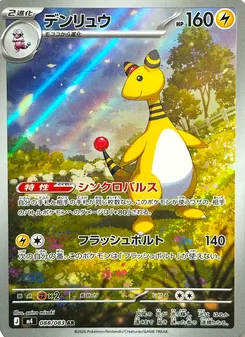
The same card, in Japan
One artwork trades in two markets under different numbers. Here is the other one.
Long-term outlook
Transparent scenario model from real solds, supply and demand — bands widen with time.
See where this card is projected to be in 10 years — scenario bands, every horizon, and the long-term verdict.
Scenario projection based on demand/supply trends and known catalysts. Not investment advice and not a guarantee of future prices.
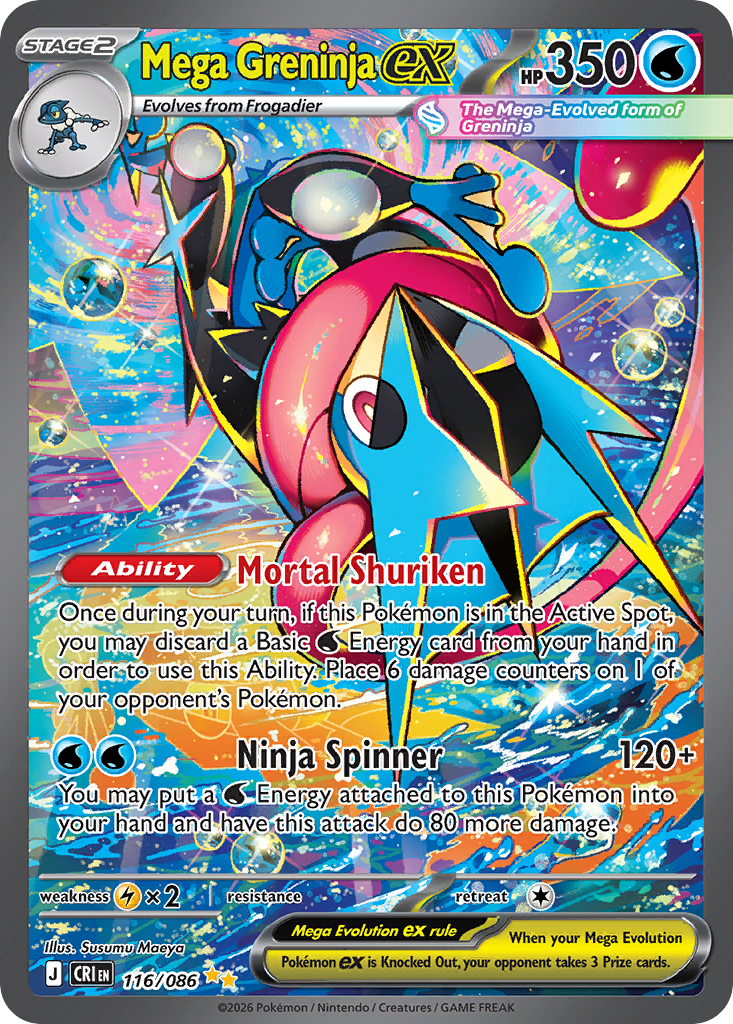
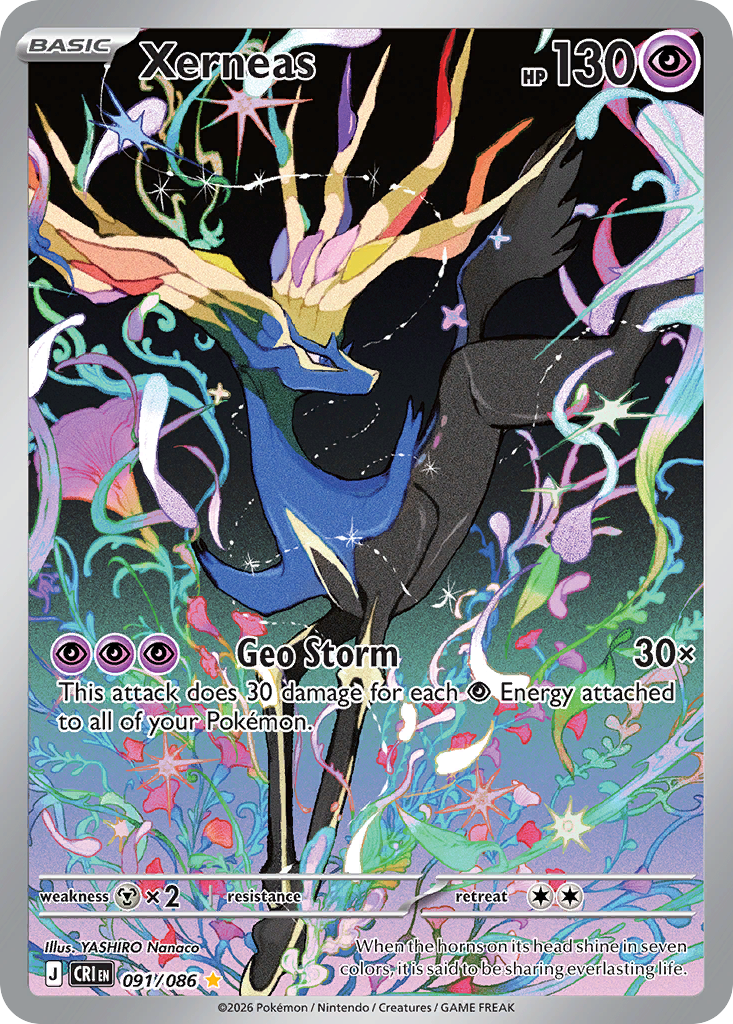
More from Chaos Rising
Same set, same shelf.

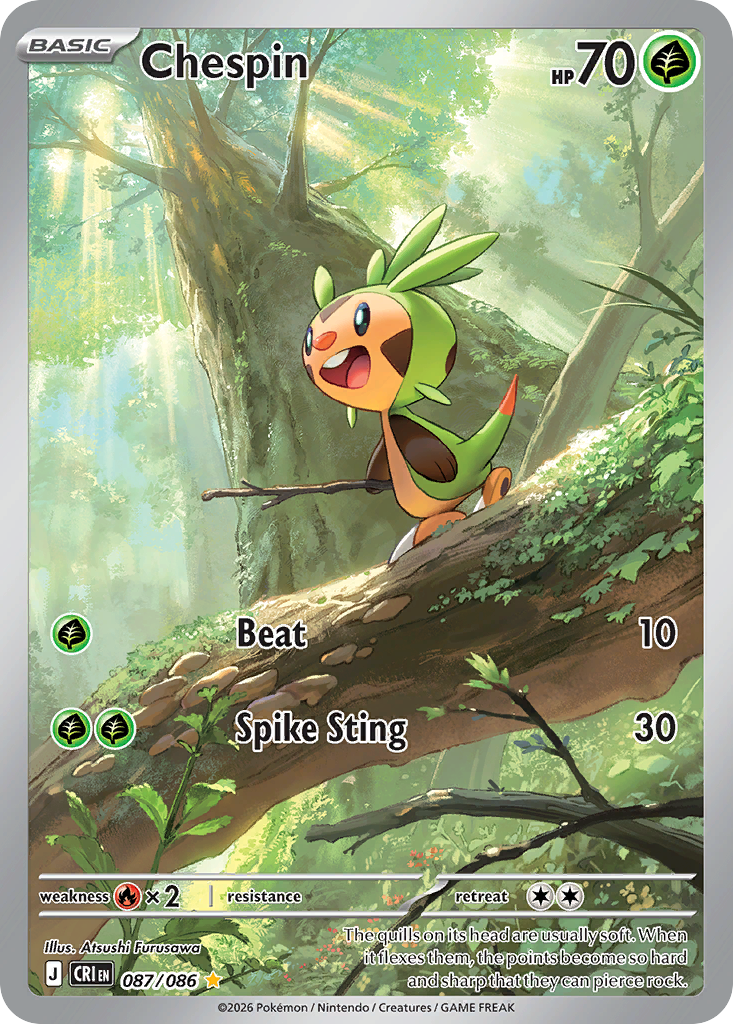
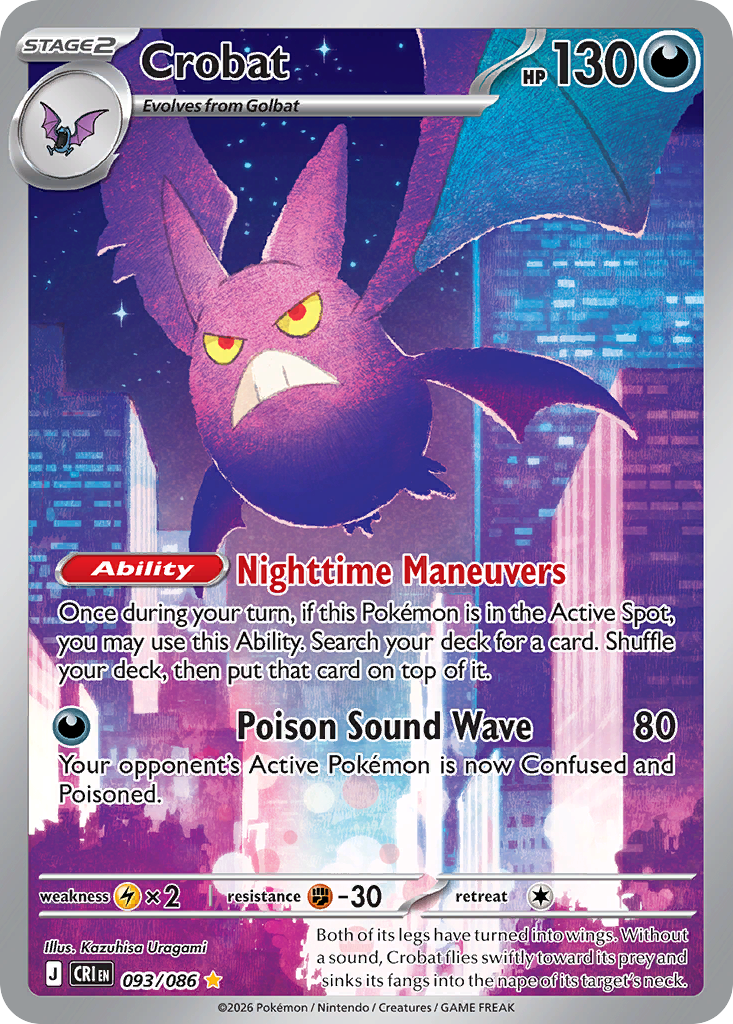
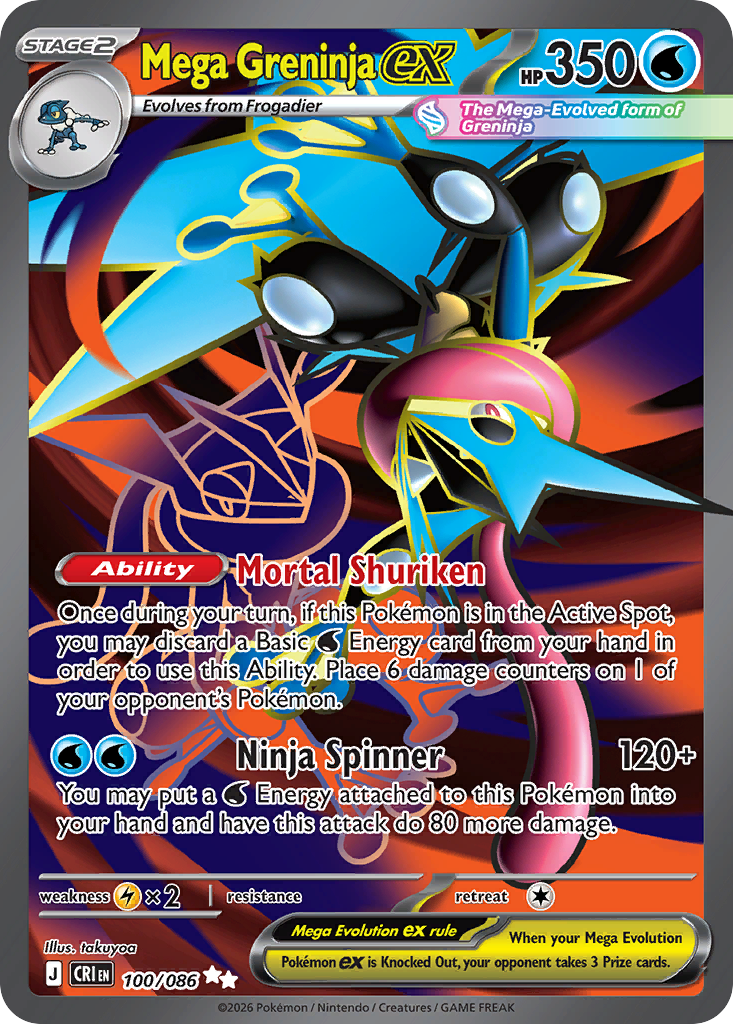
Frequently asked questions
Every answer below is computed from the sales, population and catalogue records on this page — so it changes when the market does.
How much is Ampharos (Chaos Rising #90) worth?
Ampharos (Chaos Rising #90) is worth $8.87 based on daily market prices (2 distinct sales) on Hoshino. Typical range: $7.17–$10.55 (raw/ungraded).
Where can I buy or sell Ampharos (Chaos Rising #90)?
You can find Ampharos (Chaos Rising #90) on Hoshino, with live listings on eBay (US), eBay UK, eBay AU and recent solds from Tradera. Each listing links directly to the seller’s page.
Is Ampharos (Chaos Rising #90) going up or down in price?
Ampharos (Chaos Rising #90) is trending down in price. 30-day change: -24%. Based on live market data tracked on Hoshino.
How many Ampharos (Chaos Rising #90) have been graded?
Across PSA, 954 copies of Ampharos (Chaos Rising #90) have been professionally graded, based on population reports tracked on Hoshino.
What is the PSA 10 population of Ampharos (Chaos Rising #90)?
PSA has graded 714 copies of Ampharos (Chaos Rising #90) as Gem Mint 10, according to population reports tracked on Hoshino.
Get the price badge
Embeddable price badges for Ampharos — pick the look, copy, paste. Live global data no US-only rival can show.


Drop any of these into a listing, blog or forum signature. Each carries the card itself, the live number and the basis that number rests on — real sales with their count and venues, or a clearly labelled market estimate, or an honest price building when we hold no confirmed sale — and each updates as new sales land (cached 1 hour). Add ?theme=light for light backgrounds.
The first three carry the card scan inside the file — so they render anywhere an image renders, which makes them ~220 KB — wherever we can fetch a scan small enough to embed. Where we cannot, the same badge renders without the artwork rather than shipping a broken image; the price, the grade and the basis it rests on are unaffected. Mini deliberately carries no artwork and is ~1.5 KB — use it in a forum signature that loads on every post.
Track Ampharos in your portfolio — free
Live value across every market we track, grade-EV on your exact copy, and alerts the second the price moves.